Isometric Methods, Theory And Application For Endurance Athletes (A Deep Dive)
December 22, 2025
By Coach Collen McLain
7 min to read
Kinesis Integrated is a personalized strength training app for endurance athletes. Trusted by Olympians and elite athletes, our app helps you build strength, prevent injuries, and hit new PRs.
In previous articles I have provided surface level information on the topic of Isometrics. Today I wanted to take a deeper dive into isometrics to better explain what they are and they can be a great supplement to your endurance training.
Introduction to Isometric Exercise
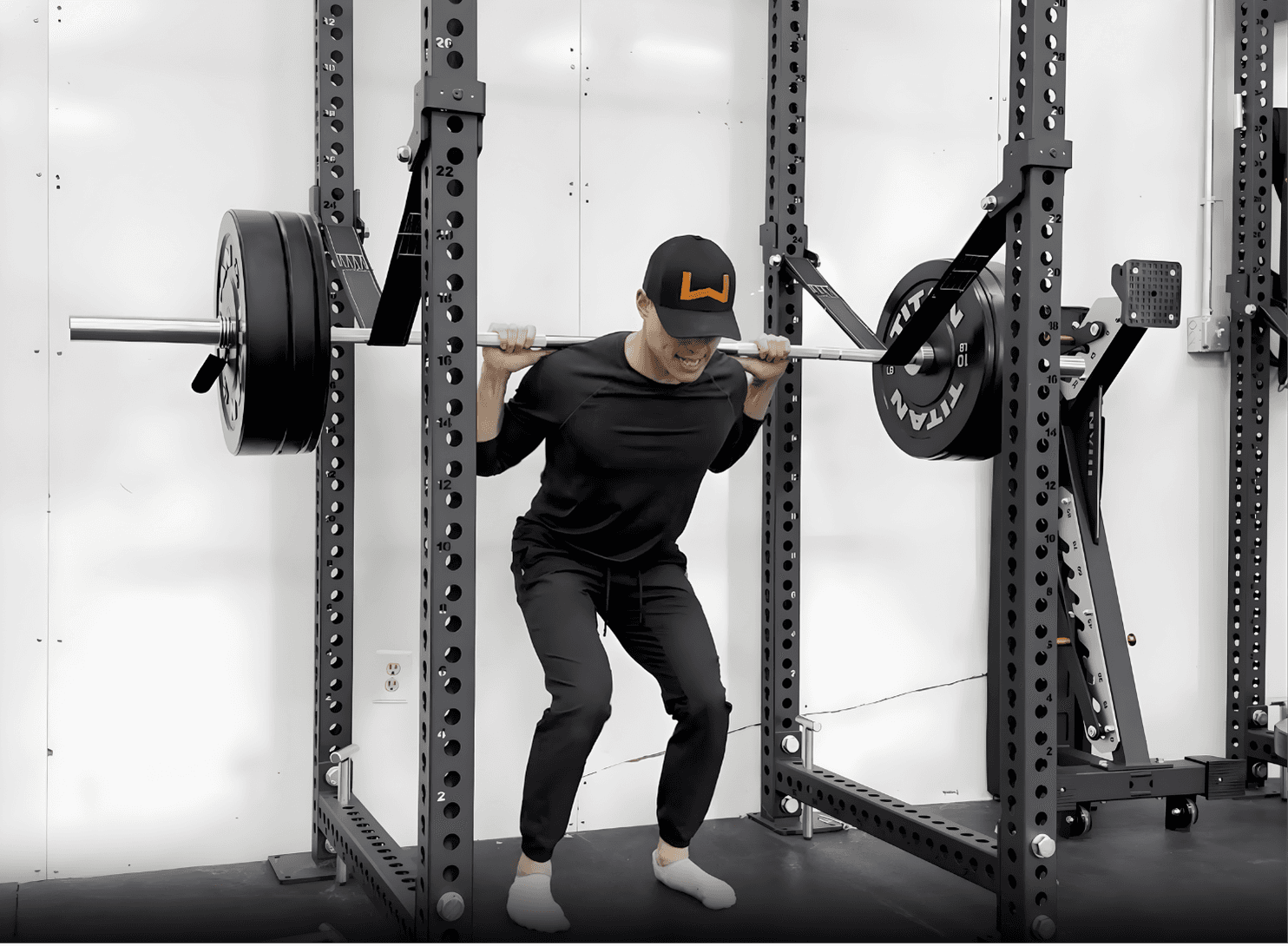
Isometric exercises involve muscle contractions where the muscle generates force without changing length or causing joint movement. This static form of training contrasts with dynamic exercises like squats or runs, where muscles shorten (concentric) or lengthen (eccentric) during motion. Isometrics can be performed anywhere with minimal equipment, making them accessible and low-impact. They emphasize holding tension at specific joint angles, which recruits muscle fibers efficiently and targets weaknesses without inducing significant fatigue or soreness.
In strength training, isometrics enhance neuromuscular efficiency, increase motor unit recruitment, and improve tendon stiffness through mechanisms like collagen cross-linking. They also promote post-activation potentiation (PAP), a temporary boost in force production that can transfer to dynamic movements. For athletes, isometrics build foundational strength, correct imbalances, and support skill transfer without interfering with sport-specific training.
Applications for Strength Training in Endurance Athlete Populations
Endurance athletes, such as ultrarunners, cyclists, or swimmers, prioritize aerobic capacity but often neglect strength, leading to inefficiencies, fatigue, and injuries like tendinopathies (most commonly; Achilles or patellar tendon issues). Isometrics address this by building muscle and tendon resilience without high metabolic demands, allowing athletes to maintain high-volume endurance work. Key applications include:
Improving Running Economy and Performance: Isometrics enhance force output and rate of force development, reduce the energy needed to maintain a given speed by increasing tendon stiffness. This leads to less fatigue, enabling athletes to sustain higher intensities longer.
Injury Prevention and Rehabilitation: By loading tendons progressively, isometrics promote collagen repair and stiffness, making them a first-line tool for tendinopathy rehab. This is why if you have been through a physical therapy program before they like had you hold a certain position for a length of time. They strengthen muscle-tendon junctions, and enhance joint stability, crucial for repetitive-impact sports and may even reduce pain. *pain is complex and multifactorial issue*
Building Psychological Stamina: Long holds foster mental toughness, while low soreness allows in-season use without recovery interference. Example how holding a plank (which is simply an isometric for the abdominal muscles) feels exponentially longer than the actual time spent in that position.
Integration into Training: Because of the variety of isometric types you could include them year round if you select the variation most appropriate to complement the phase of endurance training you are in. Beginners start with bodyweight holds; advanced athletes add maximal efforts or sport-specific angles (e.g., mid-stance positions for runners). They can replace the need for heavy resistance exercises to maintain strength gains with minimal excess fatigue.
Evidence in Endurance Contexts: Ultrarunners benefit from isometrics to protect connective tissues and run "faster and farther." Even replacing half the squat volume with isometrics yields great strength improvements. For endurance populations, 1-2 sessions weekly (e.g., 3-5 exercises, 3-5 sets) focus on lower-body strength without overloading tissue damage.
Types of Isometric Exercises
Isometrics vary by intent, intensity, and execution. Below, I detail the various types, with definitions, examples, benefits, and endurance applications.
Yielding Isometrics
Theory
Yielding isometrics involve maintaining a static position against an external force, such as gravity or a submaximal load, without allowing the joint angle to change. This is often referred to as "holding" or "resisting" isometrics, where the muscle length remains constant while countering a force that could otherwise cause movement. Physiologically, this method emphasizes control under load, recruiting muscle fibers to stabilize and prevent yielding to the resistance. It leverages the stretch-shortening cycle minimally but focuses on sustained tension, which can enhance neural drive, muscle endurance, and tendon stiffness. Unlike dynamic movements, yielding isometrics isolate specific joint angles, allowing for targeted recruitment patterns and reducing compensatory movements. They are particularly effective for positions where the muscle is at a mechanical disadvantage, such as mid-range or stretched positions, promoting hypertrophy through time under tension and improving positional strength.
Application
Yielding isometrics are applied in strength training, rehabilitation, and athletic performance to build endurance, correct imbalances, and enhance stability. Benefits include increased hypertrophy due to prolonged tension, improved tendon health, better mobility through loaded stretching variants, and reduced injury risk by strengthening weak points in lifts. They are ideal for early rehab phases to restore motor control with low cognitive load and for athletes needing positional strength, like in gymnastics or wrestling.
To perform: Select a position (e.g., mid-range or stretched) and hold against a submaximal load or even body weight for beginners for up to 60 seconds per rep, with 1-6 reps per set and 1-4 sets. Focus on maintaining form without shifting; breathe steadily. Progress by altering factors such as duration, load, joint angle, etc.
Examples:
Wall sit hold
Plank hold
Deep Lunge hold
Overcoming Isometrics
Theory
Overcoming isometrics entail exerting maximal force against an immovable object, such as pins in a rack or a fixed bar, where no joint movement occurs despite the effort. This "pushing" or "pulling" method maximizes rate of force development (RFD) by recruiting high-threshold motor units and fast-twitch fibers, enhancing neural activation without eccentric or concentric phases. The theory draws from post-activation potentiation (PAP), where intense isometric contractions prime the nervous system for greater power output in subsequent dynamic actions. It strengthens specific joint angles by increasing muscle fiber recruitment and tendon resilience, with effects transferring to speed and strength due to improved firing rates and synergist activation. Unlike yielding, overcoming emphasizes explosive intent, making it more neurologically demanding.
Application
Overcoming Isometrics can be used to help enhance overall force production when you want to keep excess muscle damage to minimum such as before key races. They can also be used to potentiate other movements in the gym. Example Isometric belt squat pull before doing jumps. Benefits include rapid neural adaptations, minimal soreness, and compatibility with skill-based training without interference. They are suitable for advanced athletes to improve top-end performance metrics like sprint speed or vertical jump.
To perform: Push or pull maximally against the immovable resistance for 3-10 seconds per rep for a total of <10 reps at 100% intensity. Rest 1-3 minutes between reps; use in warm-ups for PAP.
Examples:
Trap bar Pin Pull
Isometric Mid Thigh Pull
Sprint Stance Push
Reactive Isometrics
Theory
Reactive isometrics combine a rapid eccentric drop with an immediate isometric hold, training the body to absorb and stabilize force quickly. This method simulates plyometric actions but focuses on the "catch" phase, where muscles switch from lengthening to isometric contraction to halt momentum. Theoretically, it enhances the stretch reflex, improves force absorption via muscle-tendon units, and boosts neural efficiency in transitioning from eccentric to concentric phases. It targets proprioceptive feedback and connective tissue resilience, making it a bridge between static isometrics and dynamic explosiveness. Unlike pure isometrics, it incorporates momentum, increasing demands on the nervous system for rapid stabilization.
Application
Used in athletic training for injury prevention, power development, and rehab (e.g., ACL recovery), reactive isometrics improve the body's ability to tolerate external forces. Benefits include better force absorption, reduced injury risk in contact sports, and enhanced power output.
To perform: Drop from height or release load, catch and hold isometrically for 1-3 seconds with maximal tension; 3-10 reps per set, focusing on quality and full recovery (2-5 minutes rest).
Examples:
Depth Drops
Drop Lunges
Squat Jumps
Hamstring Bridge Exchanges
Eccentric Quasi Isometrics (EQIs)
Theory
EQIs involve a controlled eccentric lowering phase followed by a yielding isometric hold at the stretched position, where fatigue gradually causes slight muscle lengthening under submaximal load. This quasi-isometric state blends eccentric and isometric contractions, promoting adaptations at the muscle-tendon junction through prolonged tension and creep. Theoretically, it enhances hypertrophy, tendon elasticity, and strength in lengthened positions by increasing time under tension and stimulating mechanoreceptors. It differs from standard eccentrics by incorporating fatigue-induced yielding, which trains resilience and control at end ranges.
Application
EQIs are applied in prep for heavy eccentrics, benefiting populations like athletes recovering from tendon issues or seeking mobility gains. Advantages include lower injury risk with submaximal loads, improved end-range strength, and morphological changes like increased fascicle length. But be warned these are extremely fatiguing and should be used as far away from competition as possible.
To perform: Lower slowly to the stretched position, hold until fatigue causes slight drop (quasi-yielding), for 20-60 seconds; use 50-80% loads, 1-3 sets of 2-4 reps.
Examples:
Rear foot elevated split squat EQI
Pause squat
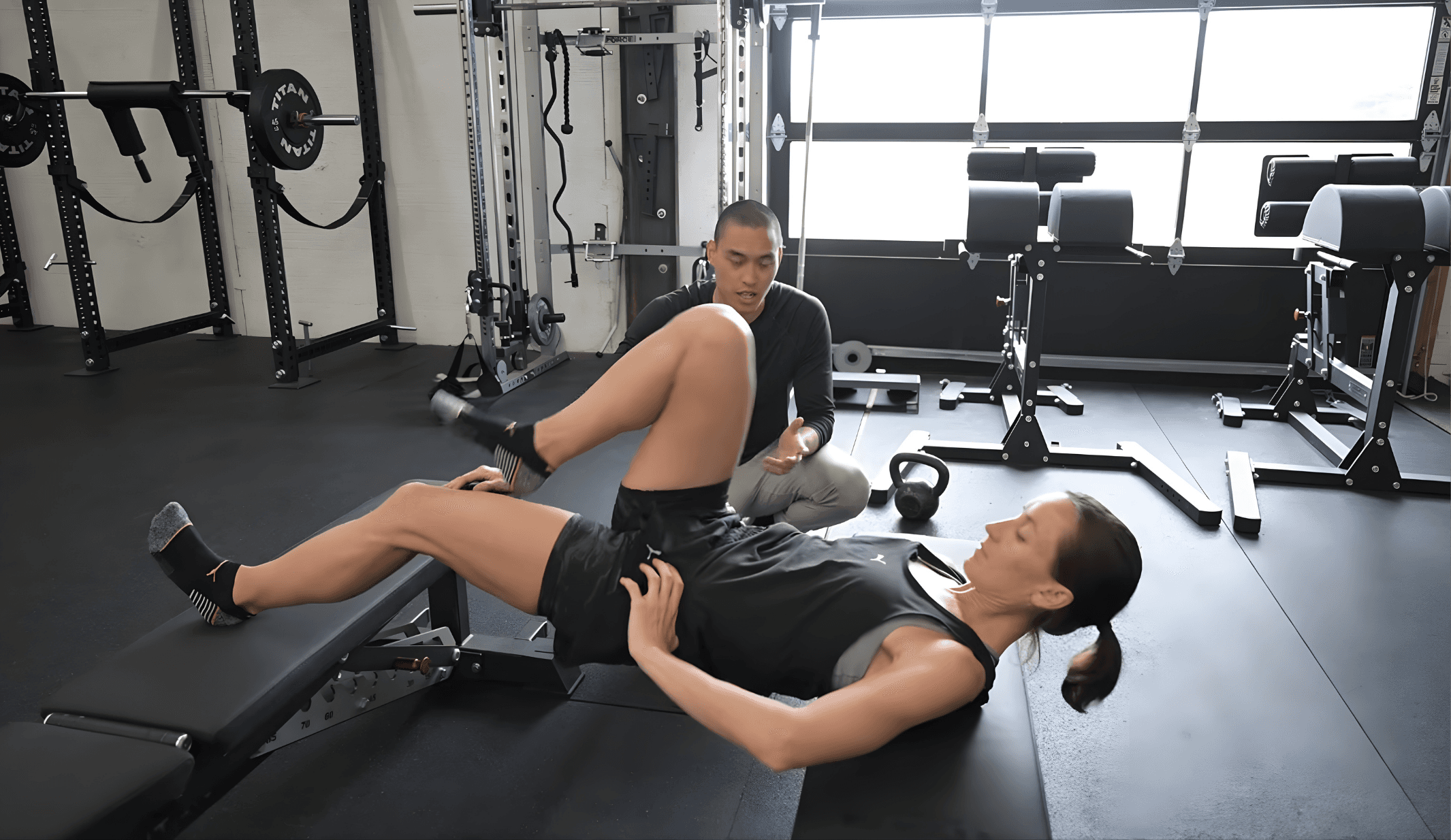
GHD EQI
Extreme Isometrics
Theory
Extreme isometrics focus on prolonged holds in maximally stretched positions using bodyweight or light loads, emphasizing "extreme slows" where the muscle resists lengthening over extended durations. This method induces tendon creep and neuromuscular efficiency, training the body to handle end-range tension without compensation. Physiologically, it enhances connective tissue health, reduces overactive patterns from injury, and improves recovery by minimizing soreness while boosting work capacity. It operates on the principle of sustained low-intensity tension to reprogram neural pathways and increase endurance at joint extremes.
Application
Used for tendon rehab, mobility enhancement, and athletic recovery, extreme isometrics build resilience in vulnerable positions. Benefits include improved joint health, reduced compensation, and daily trainability with fast recovery, ideal for speed athletes or those with overuse injuries.
To perform: Pull into extreme joint angle with good posture, hold for 2-5 minutes (or in 10-40 second intervals); build tolerance gradually.
Examples:
Extreme ISO Lunge
Dead Hang
Deep Squat Sit
Oscillatory Isometrics
Theory
Oscillatory isometrics involve rapid alternations between tension and relaxation in a static position, creating small "pulses" or bounces at a specific joint angle. This method trains the nervous system's ability to quickly activate and deactivate muscles, improving RFD, relaxation speed, and connective tissue reliance. Theoretically, it enhances athletic speed by optimizing the on-off muscle cycle, crucial for dynamic movements like sprinting. It builds on isometric principles but adds oscillation to mimic explosive actions, promoting neural efficiency and power without full-range movement.
Application
Oscillatory isometrics boost explosiveness and coordination. Benefits include faster muscle relaxation for better speed, increased strength in partial ranges, and athleticism without heavy loads.
To perform: In a static hold, rapidly tense and release muscles for 10-30 seconds, creating oscillations; 3-5 sets, with focus on quick switches.
Examples:
Oscillatory split squat.
Partial-range deadlift pulses
In summary, isometrics offer a versatile, evidence-based tool for endurance athletes to gain strength gains with minimal disruption. Start conservatively, progressing based on recovery, and consult professionals for personalization.
Ready to Integrate Isometrics Into Your Endurance Training? Work With Boulder’s Experts.
If you're an endurance athlete in Boulder, Colorado looking to improve strength, reduce injury risk, and enhance performance without adding unnecessary fatigue, Kinesis Integrated Performance is here to help. Our coaches specialize in applying a wide variety of strength training methods including those mentioned above to best for your goals whether you are a runner, cyclist, triathlete, ultrarunner, or everyday Joe.
Whether you need:
A personalized strength program
Tendon-specific rehab strategies
In-season strength support that won’t compromise training
Performance testing and movement evaluation
We've helped countless Boulder athletes build stronger, more resilient bodies.
Book a session today and experience why Kinesis Integrated Performance is Boulder’s trusted resource for evidence-based strength programming.
👉 Take the assessment in the app
👉 Schedule Your In-person Assessment
👉 Located in Boulder, CO (1756 38th St, Boulder, CO 80302)
👉Contact: info@kinesisintegrated.com
FAQ: Isometric Training for Endurance Athletes
Are isometrics good for endurance athletes?
Yes. Isometrics improve tendon stiffness, rate of force development, neuromuscular efficiency, and positional strength, all essential for endurance athletes. They enhance running economy, reduce injury risk, and provide strength adaptations with very little fatigue, making them ideal during high-volume training.
Can isometrics help with tendon pain, Achilles issues, or patellar tendinopathy?
Absolutely. Isometrics are often used as a first-line intervention in tendon rehab because they increase tendon stiffness, promote collagen adaptation, and may temporarily reduce pain. Many Boulder-area runners and cyclists use isometrics to manage Achilles or knee issues while maintaining training volume.
How often should endurance athletes perform isometric training?
It depends on the variation you are implementing. Yielding ISOs could be used daily but a heavy EQI should be used sparingly. Best practice would be to consult with a coach familiar with the potential risks and benefits of each variation.
What’s the difference between yielding and overcoming isometrics?
Yielding isometrics involve holding a position against gravity or load (wall sits, planks).
Overcoming isometrics involve pushing maximally against an immovable object (mid-thigh pull, pin pulls).
Yielding builds endurance and tendon health; overcoming improves maximal force and neuromuscular output.
Are isometrics safe to use during race season or high-volume training cycles?
Yes. Isometrics create minimal muscle damage and low metabolic cost, making them perfect for in-season maintenance, taper weeks, and training blocks with lots of miles or hours. Boulder endurance athletes frequently use them between key sessions without interfering with recovery.
Can I replace heavy lifting with isometrics?
In certain phases, especially during peak race prep, you can maintain strength with isometrics while avoiding soreness or central fatigue. Research shows that even replacing 50% of squat volume with isometrics still results in notable strength improvements.
Which type of isometric is best for endurance athletes?
It depends on what your goal is. Each type has specific benefits:
Yielding → endurance + tendon health
Overcoming → force production + PAP
Reactive → force absorption + stability
EQIs → tendon remodeling + end-range strength
Extreme Isometrics → mobility + recovery
Oscillatory → speed + reactivity
Kinesis Integrated Performance evaluates which methods best match your training block, injury history, and sport demands.
How do I get started with Kinesis Integrated Performance?
You can schedule a consultation, movement assessment, or coaching session directly through our website or by contacting our Boulder, CO location. Sessions are available for runners, cyclists, triathletes, ultrarunners, mountain athletes, and youth athletes.
👉 Book Now
At Kinesis, we help endurance athletes stay healthy and perform year-round. Whether you’re training for Boston, UTMB, or your local 10K, our strength plans plug into your routine and make you stronger where it counts.
Our app auto-builds a race-specific plan in minutes so you climb harder, descend cleaner, and finish fresher. Start for free here.