Kinesis Integrated Boulder: The Complete Guide to Elite Strength Training for Endurance Athletes
January 7, 2026
By Coach Chris Lee
9 min to read
Kinesis Integrated is a personalized strength training app for endurance athletes. Trusted by Olympians and elite athletes, our app helps you build strength, prevent injuries, and hit new PRs.
Why Most Endurance Athletes Are Training Wrong
Endurance athletes face a paradox that most never recognize: the very training that makes them faster also creates the conditions for injury, plateau, and frustration.
Runners log hundreds of miles. Cyclists push thousands of watts. Triathletes balance three disciplines while chasing ever-improving race times. These athletes are disciplined, dedicated, and determined. Yet research shows that up to 90% of runners report injuries annually that limit their training or competition.
The uncomfortable truth is that most endurance athletes are missing a foundational piece of their training equation. They invest heavily in sport-specific work—the runs, the rides, the swims—while neglecting the strength and conditioning that determines whether their bodies can sustainably handle that load.
The 85% Solution
Here is the finding that should change how every endurance athlete approaches their training: runners who incorporate structured strength training are 85% less likely to sustain future injuries.
This isn't a minor improvement. This represents a complete paradigm shift in injury risk management. Yet most endurance athletes either skip strength work entirely or follow generic programs that fail to address their specific needs as runners, cyclists, and triathletes.
Why does this gap exist? Because the fitness industry has failed to clearly communicate what strength and conditioning actually means for endurance athletes, and most training facilities lack the expertise to deliver sport-specific programming.
The Boulder Advantage and Challenge
Boulder, Colorado stands as one of the premier endurance training destinations in North America. The city's 5,318-foot elevation creates natural altitude training conditions
World-class trail networks attract runners and cyclists from around the globe. Professional triathletes call Boulder home precisely because the environment supports elite endurance development.
This concentration of elite athletes creates both opportunity and pressure. Athletes in Boulder have access to coaching, facilities, and training partners that most cities cannot match. Yet the competitive environment also means that marginal gains matter more than ever. The athlete who optimizes every element of their training—from nutrition to recovery to strength work—will inevitably outperform the athlete who neglects any foundational pillar.
This article explains how Kinesis Integrated helps Boulder athletes optimize that foundational pillar through an assessment-first approach that delivers measurable results for runners, cyclists, and triathletes ranging from competitive amateurs to world-class professionals.
What Makes Kinesis Integrated Different
Kinesis Integrated was built around a single question: What would strength and conditioning look like if every athlete—at every level—received the same standard of care typically reserved for elite sport?
The answer transformed everything about how we approach athlete development. From the initial assessment through ongoing programming, every element of the Kinesis experience reflects this commitment to elite standards.
The Four Pillars of the Kinesis Approach
Assessment Depth: Every athlete begins with a comprehensive 90-120 minute evaluation that examines movement patterns, joint function, muscle performance, and movement quality across multiple dimensions. This isn't a 15-minute fitness assessment. It's a diagnostic deep-dive that forms the foundation for everything that follows.
Team-Based Decision Making: After assessments, coaches meet collaboratively to review findings, identify system-wide patterns, and design programming that addresses the whole athlete rather than isolated symptoms. No single coach works in isolation. Multiple perspectives converge to create the most complete picture possible.
Deliberate Capacity Limits: Each Kinesis coach maintains a limited roster of athletes. This isn't a business constraint—it's a philosophical commitment. We believe that athletes deserve meaningful attention, thoughtful session planning, and ongoing adjustments based on their actual response to training. These things are impossible when coaches manage excessively large caseloads.
Long-Term Perspective: Training programs at Kinesis Integrated are designed with seasons and years in mind, not just next week's session. Monthly reviews assess what worked, what didn't, and how the next phase should be structured. This compounding approach means athletes build upon previous progress rather than resetting due to injury or burnout.
The Olympic Heritage
Kinesis Integrated was built by coaches with Olympic experience. This heritage influences every aspect of our programming, from assessment methodology to periodization principles to the standards we hold for coach education.
Our assessment framework is so rigorous that it's used as an educational resource within professional certification courses, including TrainingPeaks modules. This means the same evaluation methods we apply to Boulder athletes are taught to coaches pursuing advanced credentials across the endurance sports industry.
The Kinesis Assessment Process
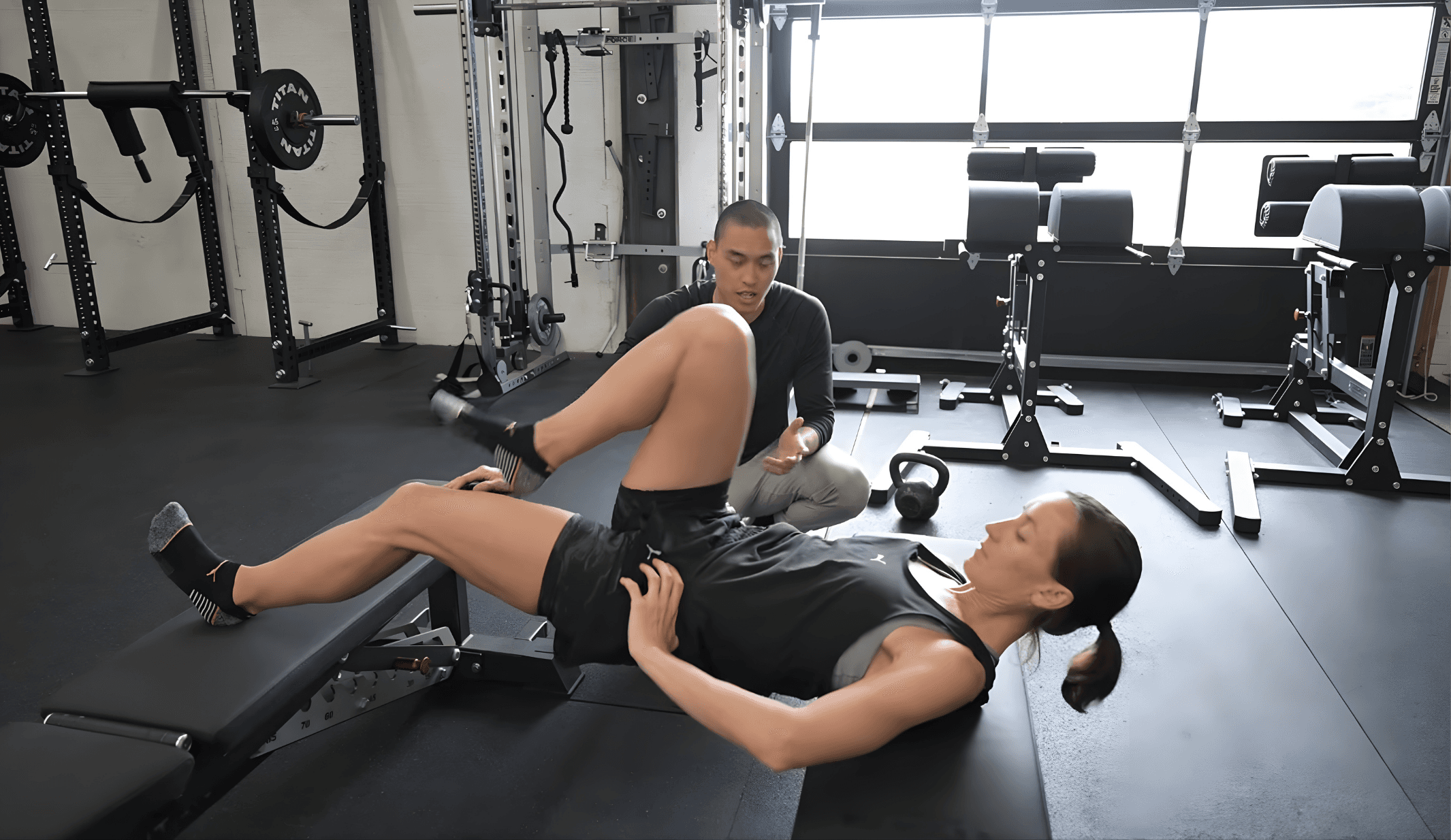
The Kinesis assessment represents the most comprehensive evaluation available for endurance athletes in the Boulder area. This 90-120 minute session examines multiple dimensions of movement and function to create a complete picture of each athlete's starting point.
What the Assessment Evaluates
Large Movement Patterns: Athletes are evaluated through fundamental movement patterns including squats, hinges, lunges, pushes, pulls, and carries. These patterns reveal compensation strategies, asymmetries, and movement quality issues that affect sport performance and injury risk.
Joint-by-Joint Function: Each joint receives individual evaluation to identify restrictions, hypermobilities, and movement quality issues. This systematic approach ensures nothing is missed and patterns across the kinetic chain are identified.
Manual Muscle Testing. Objective measures of strength and function across key movement patterns provide baseline data for programming and progress tracking.
Redundancy Checks: Multiple evaluation methods confirm findings and prevent false positives. When different assessment approaches converge on the same conclusion, coaches can be confident in their understanding of the athlete's needs.
Why 90-120 Minutes Matters
Many fitness facilities conduct assessments in 15-20 minutes. This timeframe allows for basic fitness testing but cannot capture the depth of information necessary for truly individualized programming.
The Kinesis assessment takes longer because depth matters. Every minute invested in understanding an athlete's movement patterns, limitations, and asymmetries pays dividends in programming precision. Athletes don't receive generic programs. They receive programming that addresses their specific needs based on objective evaluation.
The Assessment as Educational Framework
The assessment process serves a secondary purpose beyond diagnosis. For many athletes, the evaluation itself is educational—revealing movement patterns they weren't aware of, explaining why certain limitations exist, and building understanding that supports long-term athlete development.
This educational component reflects the Kinesis philosophy: athletes who understand their bodies make better training decisions, communicate more effectively with coaches, and take ownership of their development.
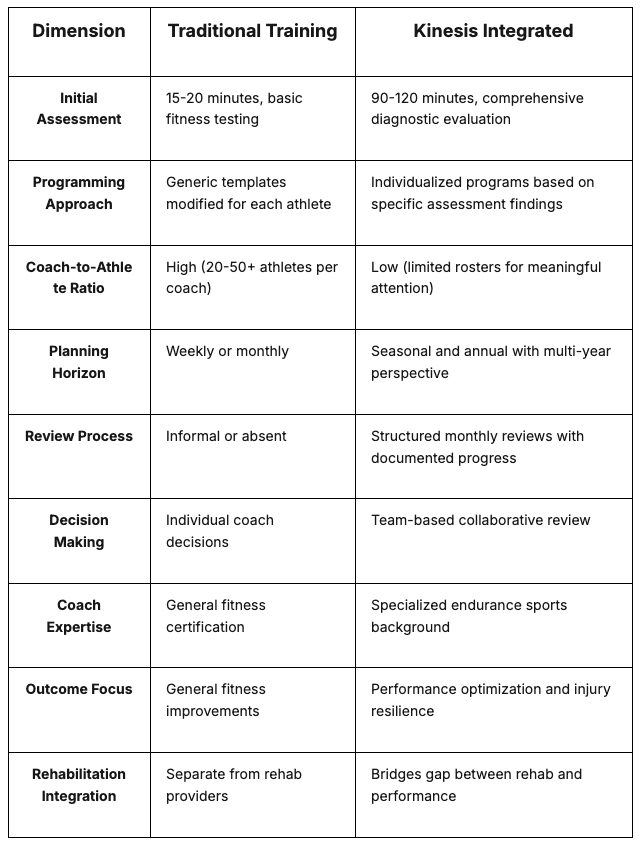
Comparison: Kinesis Integrated vs Traditional Training
The following comparison illustrates the fundamental differences between the Kinesis Integrated approach and traditional strength and conditioning models.