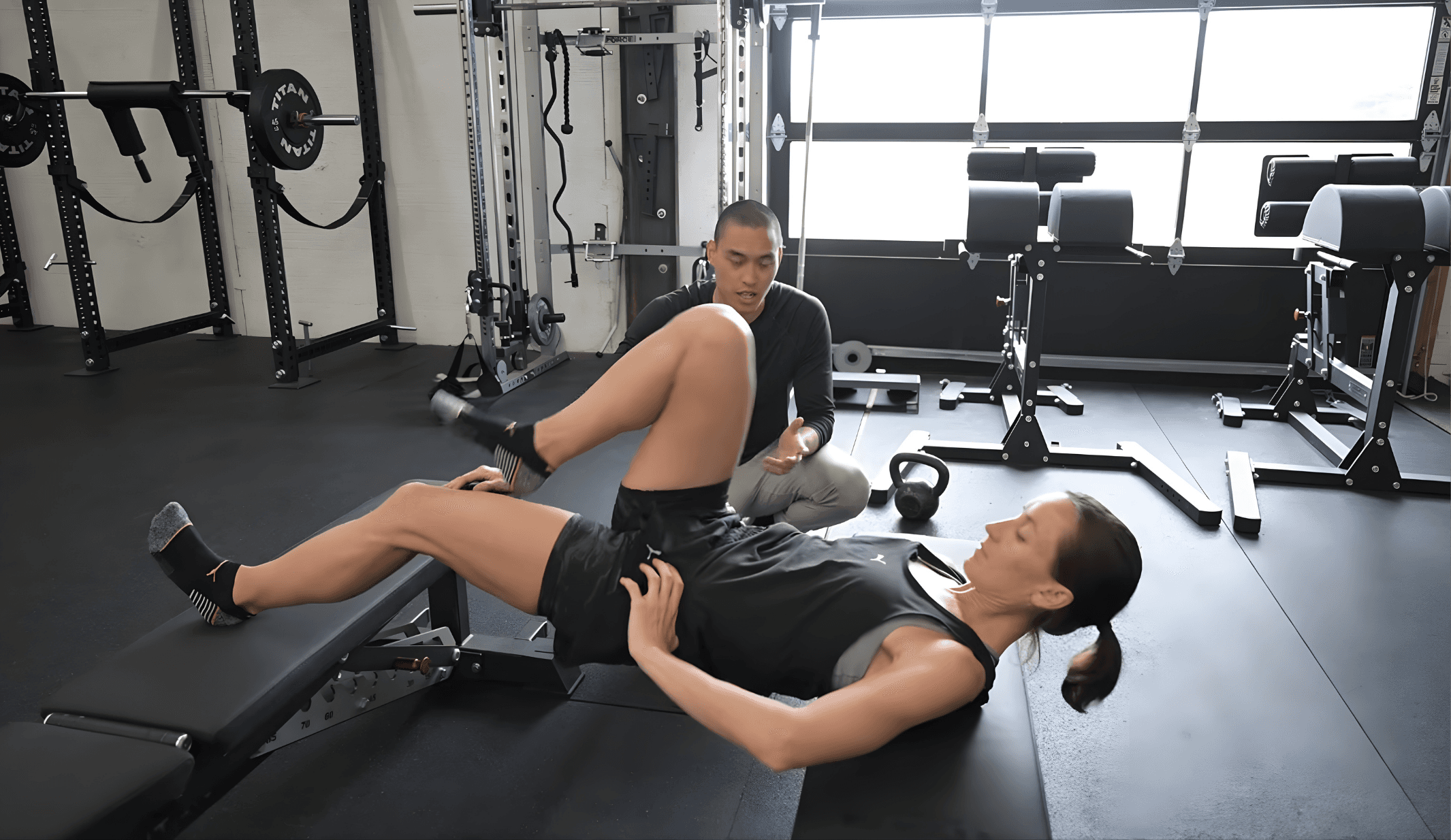
The Romanian Deadlift: A Simple and Pragmatic Guide for Runners

December 8, 2025

By Coach Collen McLain

3 min to read

Kinesis Integrated is a personalized strength training app for endurance athletes. Trusted by Olympians and elite athletes, our app helps you build strength, prevent injuries, and hit new PRs.

In the spirit of Sorinex Deadcember kicking off and myself embarking on a journey of hoisting a barbell 5x/week while running ~30mph, I decided it was prime time to speak about one of my favorite exercises, the RDL. The Romanian deadlift (RDL) is a simple, highly effective hinge pattern that every runner should have in their training toolkit.

This movement strengthens the posterior chain which consists of the hamstrings, glutes, and spinal erectors. These muscles collectively play a major role in running performance and injury resilience. Even better, the RDL is incredibly scalable and can be performed with minimal equipment, making it accessible for runners at any level.
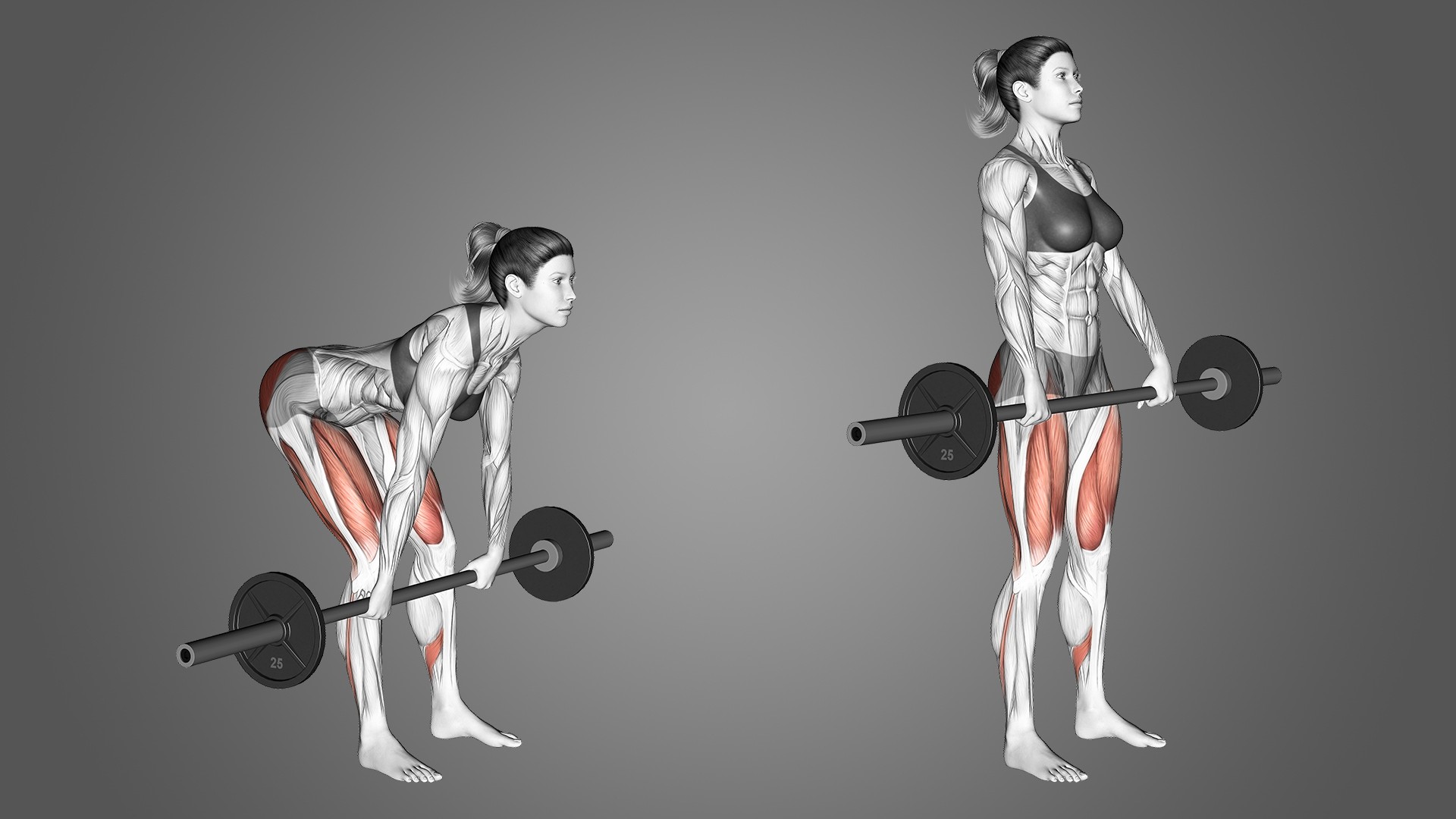
How to Perform the Romanian Deadlift

The most common variation of the RDL is performed with a barbell. Hereโ€™s how to execute it with confidence and proper form:

  1. Set up the rack. Place the barbell on hooks positioned around mid-thigh height. Load your desired weight.

  2. Grip the bar. Stand centered over the bar and grasp it just outside your thighsโ€”usually where the knurling meets the smooth portion of the bar.

  3. Unrack and brace. Brace your core, lift the barbell out of the rack, and take a small step back. Maintain that braced position throughout the entire movement.

  4. Hinge at the hips. With soft knees, push your hips back and slightly upward. Keep the bar in contact with your thighs as you descend.

  5. Control the descent. Once the bar passes your knees, keep it close to your shins (no need to drag it down your legs). Lower until you feel a strong stretch in your hamstrings and/or glutesโ€”or until you reach the floor, if your mobility allows.

  6. Return to standing. Drive your feet into the floor, squeeze your glutes, and stand tall.


Youโ€™ve just completed a Romanian deadlift.


Why Runners Should Prioritize the Romanian Deadlift
You might be wondering: Why choose an RDL over a traditional deadlift?


The RDL offers many of the strength benefits of a full deadlift with fewer technical demands and less stress from pulling off the floor. While deadlifting isnโ€™t inherently โ€œbad for your back,โ€ poor technique or too-aggressive loading can create issues. Most deadlift injuries happen during the initial pull from the floor. The impulse required to move a heavy load is high and if you are out of position in an attempt to gain better leverage you can run a greater risk of a low back injury. The RDL sidesteps but doesnโ€™t completely eliminate this risk. In an RDL you begin from the top of the movement and gain momentum through the descent which can be translated vertically with the help of some rubber plates and a proper lifting platform. This all comes together to lower the risk associated with the traditional deadlift while still developing tremendous posterior-chain strength, strength that actually reduces your long-term risk of low-back pain. This is of course if proper technique at manageable loads is followed. Remember no matter how good it feels to pull big weight as an endurance athlete, strength is supplementary to your sport. 


From a running-specific standpoint, faster running speeds require greater hip extension mechanics (yes, a simplified explanation of gait, but directionally true). The hamstrings absorb and generate significant force during running, so improving their strength, stiffness, and durability is a direct performance and injury-prevention investment.


Scaling and Variations for Every Runner

One of the biggest advantages of the Romanian deadlift is its versatility. You can scale it based on your experience, available equipment, and training goals.


Range-of-Motion Options

  • Deficit RDL: Stand on a block to increase the range of motionโ€”great for athletes with excellent mobility or during training blocks emphasizing long muscle lengths.

  • Rack / Block RDL: Start the bar at a higher position to reduce the range of motion. This decreases eccentric stress while allowing heavier loads.

Overload Strategies

  • Eccentric Emphasis: You donโ€™t need specialty equipment. Try:

    • Two legs up, one leg down

    • Two dumbbells on the way down, one on the way up

  • Power RDL: Drop the load to ~60โ€“80%, focus on bar speed, and use low reps per set.

Unilateral Options

  • Single-Leg RDL: Perform with a dumbbell or kettlebell for a powerful blend of hamstring strength, hip stability, and balance.

  • Assisted Single-Leg RDL: If balance is a challenge, stand next to a wall, rack, or bench for light support while still reaping unilateral benefits.


Kinesis Integrated Training Services for Runners in Boulder, CO

Whether youโ€™re building strength for your next race or preventing recurring running injuries, Kinesis Integrated in Boulder, Colorado provides personalized strength and conditioning solutions designed specifically for endurance athletes. Our in-person coaching sessions deliver hands-on technique refinement and individualized progression, while our remote training programs give you expert guidance from anywhere with a plan that fits your schedule, equipment, and running goals. From foundational movements like the Romanian Deadlift to fully tailored periodized plans, Kinesis Integrated helps runners perform better, stay healthy, and feel stronger every mile.


Ready to Get Stronger and Run Better?

Take the next step toward healthier, faster running with Kinesis Integrated. Whether youโ€™re local to Boulder, Colorado and want expert in-person coaching, or youโ€™re training remotely from anywhere in the world, weโ€™ll build a strength program that supports your running goals and fits your schedule.


๐Ÿ“… Book a Consultation: Schedule your first visit or download the app for our remote assessment โ€” Book In-Person Now

๐Ÿ“ง Contact Us: info@kinesisintegrated.com

๐Ÿ“ Train With Us In-Person: 1756 38th St, Boulder, CO 80302


Follow along for running-specific strength tips and updates:
Instagram: @kinesisintegrated


Stronger legs. Healthier miles. Smarter training.
Letโ€™s build your posterior-chain power together.

How to Perform the Romanian Deadlift

The most common variation of the RDL is performed with a barbell. Hereโ€™s how to execute it with confidence and proper form:

  1. Set up the rack. Place the barbell on hooks positioned around mid-thigh height. Load your desired weight.

  2. Grip the bar. Stand centered over the bar and grasp it just outside your thighsโ€”usually where the knurling meets the smooth portion of the bar.

  3. Unrack and brace. Brace your core, lift the barbell out of the rack, and take a small step back. Maintain that braced position throughout the entire movement.

  4. Hinge at the hips. With soft knees, push your hips back and slightly upward. Keep the bar in contact with your thighs as you descend.

  5. Control the descent. Once the bar passes your knees, keep it close to your shins (no need to drag it down your legs). Lower until you feel a strong stretch in your hamstrings and/or glutesโ€”or until you reach the floor, if your mobility allows.

  6. Return to standing. Drive your feet into the floor, squeeze your glutes, and stand tall.


Youโ€™ve just completed a Romanian deadlift.


Why Runners Should Prioritize the Romanian Deadlift
You might be wondering: Why choose an RDL over a traditional deadlift?


The RDL offers many of the strength benefits of a full deadlift with fewer technical demands and less stress from pulling off the floor. While deadlifting isnโ€™t inherently โ€œbad for your back,โ€ poor technique or too-aggressive loading can create issues. Most deadlift injuries happen during the initial pull from the floor. The impulse required to move a heavy load is high and if you are out of position in an attempt to gain better leverage you can run a greater risk of a low back injury. The RDL sidesteps but doesnโ€™t completely eliminate this risk. In an RDL you begin from the top of the movement and gain momentum through the descent which can be translated vertically with the help of some rubber plates and a proper lifting platform. This all comes together to lower the risk associated with the traditional deadlift while still developing tremendous posterior-chain strength, strength that actually reduces your long-term risk of low-back pain. This is of course if proper technique at manageable loads is followed. Remember no matter how good it feels to pull big weight as an endurance athlete, strength is supplementary to your sport. 


From a running-specific standpoint, faster running speeds require greater hip extension mechanics (yes, a simplified explanation of gait, but directionally true). The hamstrings absorb and generate significant force during running, so improving their strength, stiffness, and durability is a direct performance and injury-prevention investment.


Scaling and Variations for Every Runner

One of the biggest advantages of the Romanian deadlift is its versatility. You can scale it based on your experience, available equipment, and training goals.


Range-of-Motion Options

  • Deficit RDL: Stand on a block to increase the range of motionโ€”great for athletes with excellent mobility or during training blocks emphasizing long muscle lengths.

  • Rack / Block RDL: Start the bar at a higher position to reduce the range of motion. This decreases eccentric stress while allowing heavier loads.

Overload Strategies

  • Eccentric Emphasis: You donโ€™t need specialty equipment. Try:

    • Two legs up, one leg down

    • Two dumbbells on the way down, one on the way up

  • Power RDL: Drop the load to ~60โ€“80%, focus on bar speed, and use low reps per set.

Unilateral Options

  • Single-Leg RDL: Perform with a dumbbell or kettlebell for a powerful blend of hamstring strength, hip stability, and balance.

  • Assisted Single-Leg RDL: If balance is a challenge, stand next to a wall, rack, or bench for light support while still reaping unilateral benefits.


Kinesis Integrated Training Services for Runners in Boulder, CO

Whether youโ€™re building strength for your next race or preventing recurring running injuries, Kinesis Integrated in Boulder, Colorado provides personalized strength and conditioning solutions designed specifically for endurance athletes. Our in-person coaching sessions deliver hands-on technique refinement and individualized progression, while our remote training programs give you expert guidance from anywhere with a plan that fits your schedule, equipment, and running goals. From foundational movements like the Romanian Deadlift to fully tailored periodized plans, Kinesis Integrated helps runners perform better, stay healthy, and feel stronger every mile.


Ready to Get Stronger and Run Better?

Take the next step toward healthier, faster running with Kinesis Integrated. Whether youโ€™re local to Boulder, Colorado and want expert in-person coaching, or youโ€™re training remotely from anywhere in the world, weโ€™ll build a strength program that supports your running goals and fits your schedule.


๐Ÿ“… Book a Consultation: Schedule your first visit or download the app for our remote assessment โ€” Book In-Person Now

๐Ÿ“ง Contact Us: info@kinesisintegrated.com

๐Ÿ“ Train With Us In-Person: 1756 38th St, Boulder, CO 80302


Follow along for running-specific strength tips and updates:
Instagram: @kinesisintegrated


Stronger legs. Healthier miles. Smarter training.
Letโ€™s build your posterior-chain power together.

How to Perform the Romanian Deadlift

The most common variation of the RDL is performed with a barbell. Hereโ€™s how to execute it with confidence and proper form:

  1. Set up the rack. Place the barbell on hooks positioned around mid-thigh height. Load your desired weight.

  2. Grip the bar. Stand centered over the bar and grasp it just outside your thighsโ€”usually where the knurling meets the smooth portion of the bar.

  3. Unrack and brace. Brace your core, lift the barbell out of the rack, and take a small step back. Maintain that braced position throughout the entire movement.

  4. Hinge at the hips. With soft knees, push your hips back and slightly upward. Keep the bar in contact with your thighs as you descend.

  5. Control the descent. Once the bar passes your knees, keep it close to your shins (no need to drag it down your legs). Lower until you feel a strong stretch in your hamstrings and/or glutesโ€”or until you reach the floor, if your mobility allows.

  6. Return to standing. Drive your feet into the floor, squeeze your glutes, and stand tall.


Youโ€™ve just completed a Romanian deadlift.


Why Runners Should Prioritize the Romanian Deadlift
You might be wondering: Why choose an RDL over a traditional deadlift?


The RDL offers many of the strength benefits of a full deadlift with fewer technical demands and less stress from pulling off the floor. While deadlifting isnโ€™t inherently โ€œbad for your back,โ€ poor technique or too-aggressive loading can create issues. Most deadlift injuries happen during the initial pull from the floor. The impulse required to move a heavy load is high and if you are out of position in an attempt to gain better leverage you can run a greater risk of a low back injury. The RDL sidesteps but doesnโ€™t completely eliminate this risk. In an RDL you begin from the top of the movement and gain momentum through the descent which can be translated vertically with the help of some rubber plates and a proper lifting platform. This all comes together to lower the risk associated with the traditional deadlift while still developing tremendous posterior-chain strength, strength that actually reduces your long-term risk of low-back pain. This is of course if proper technique at manageable loads is followed. Remember no matter how good it feels to pull big weight as an endurance athlete, strength is supplementary to your sport. 


From a running-specific standpoint, faster running speeds require greater hip extension mechanics (yes, a simplified explanation of gait, but directionally true). The hamstrings absorb and generate significant force during running, so improving their strength, stiffness, and durability is a direct performance and injury-prevention investment.


Scaling and Variations for Every Runner

One of the biggest advantages of the Romanian deadlift is its versatility. You can scale it based on your experience, available equipment, and training goals.


Range-of-Motion Options

  • Deficit RDL: Stand on a block to increase the range of motionโ€”great for athletes with excellent mobility or during training blocks emphasizing long muscle lengths.

  • Rack / Block RDL: Start the bar at a higher position to reduce the range of motion. This decreases eccentric stress while allowing heavier loads.

Overload Strategies

  • Eccentric Emphasis: You donโ€™t need specialty equipment. Try:

    • Two legs up, one leg down

    • Two dumbbells on the way down, one on the way up

  • Power RDL: Drop the load to ~60โ€“80%, focus on bar speed, and use low reps per set.

Unilateral Options

  • Single-Leg RDL: Perform with a dumbbell or kettlebell for a powerful blend of hamstring strength, hip stability, and balance.

  • Assisted Single-Leg RDL: If balance is a challenge, stand next to a wall, rack, or bench for light support while still reaping unilateral benefits.


Kinesis Integrated Training Services for Runners in Boulder, CO

Whether youโ€™re building strength for your next race or preventing recurring running injuries, Kinesis Integrated in Boulder, Colorado provides personalized strength and conditioning solutions designed specifically for endurance athletes. Our in-person coaching sessions deliver hands-on technique refinement and individualized progression, while our remote training programs give you expert guidance from anywhere with a plan that fits your schedule, equipment, and running goals. From foundational movements like the Romanian Deadlift to fully tailored periodized plans, Kinesis Integrated helps runners perform better, stay healthy, and feel stronger every mile.


Ready to Get Stronger and Run Better?

Take the next step toward healthier, faster running with Kinesis Integrated. Whether youโ€™re local to Boulder, Colorado and want expert in-person coaching, or youโ€™re training remotely from anywhere in the world, weโ€™ll build a strength program that supports your running goals and fits your schedule.


๐Ÿ“… Book a Consultation: Schedule your first visit or download the app for our remote assessment โ€” Book In-Person Now

๐Ÿ“ง Contact Us: info@kinesisintegrated.com

๐Ÿ“ Train With Us In-Person: 1756 38th St, Boulder, CO 80302


Follow along for running-specific strength tips and updates:
Instagram: @kinesisintegrated


Stronger legs. Healthier miles. Smarter training.
Letโ€™s build your posterior-chain power together.

Kinesis Integrated On Romanian Deadlifts

FAQ: Romanian Deadlifts & Strength Training for Runners

Why should runners in Boulder focus on Romanian Deadlifts?
Romanian Deadlifts strengthen the hamstrings, glutes, and lower backโ€”muscles heavily taxed while running. They improve running efficiency, resilience, and power, especially for trail runners tackling elevation in and around Boulder.


Is the Romanian Deadlift safe for runners with low-back issues?
Yes, with clearance from your primary care physician or physical therapist. When coached properly, RDLs reduce future low-back injury risk by strengthening the posterior chain. At Kinesis Integrated, we teach techniques that protect the spine and fit each athleteโ€™s movement capability.


Can beginners or youth athletes learn Romanian Deadlifts?
Absolutely. RDLs are highly scalable. We adjust load, range of motion, and equipment to match your current level. Our coaches specialize in progressive strength development for youth and adult endurance athletes.


What equipment do I need if I train remotely?
Even minimal equipment works, dumbbells, kettlebells, resistance bands or a barbell if available. Kinesis Integrated programs include creative variations that match your home or gym setup so you can train effectively anywhere. 


How often should runners include RDLs in their training?
Most runners benefit from 1โ€“2 strength sessions per week. I would suggest one of those sessions utilize the RDL or an alternative loadable hip hinging movement. Our Boulder-based running specialists adjust frequency based on your event demands, mileage, and current training phase.


Can Kinesis Integrated help me improve balance for single-leg RDLs?
Yes! We coach progressions from supported single-leg variations to less stable variations which overtime will improve hip stability and reduce common running injuries like IT-band irritation and hamstring strains.


Do you offer assessments before adding strength training?
We do. Whether in-person in Boulder or remotely, we offer movement screens and performance testing to ensure Romanian Deadlifts and other hinge patterns are introduced safely and productively.


At Kinesis, we help endurance athletes stay healthy and perform year-round. Whether youโ€™re training for Boston, UTMB, or your local 10K, our strength plans plug into your routine and make you stronger where it counts.


Our app auto-builds a race-specific plan in minutes so you climb harder, descend cleaner, and finish fresher. Start for free here.