Why Start With Strength
December 1, 2025
By Coach Collen McLain
6 min to read
Kinesis Integrated is a personalized strength training app for endurance athletes. Trusted by Olympians and elite athletes, our app helps you build strength, prevent injuries, and hit new PRs.
After a much-needed break, it’s time to begin building toward your next endurance goal. While it’s tempting to jump straight back into high training volumes, your body is coming off a period of detraining and needs to be rebuilt gradually. Ramping up sport-specific work too quickly increases the risk of injury, slowing, or even derailing, your entire build.
This early window is the perfect time to take advantage of lower sport volumes and pair them with targeted strength training. Done well, this combination sets the stage for a healthier, stronger, and more productive season.
The Marshmallow Metaphor: Understanding Stress
Think of training like roasting a marshmallow: you want it golden brown and gooey inside. Not burnt to a crisp (unless you’re into that).
In this analogy:
You are the marshmallow
Stress whether from training or life, is the fire
Your body doesn’t distinguish between different kinds of stress. It only registers total load on the system. Too much heat too quickly, and the marshmallow burns. Too little, and nothing changes.
Coming off a break, your “fire” is small. Sport volume is low and not yet producing enough stimulus to create meaningful adaptation. This is where strength training becomes your additional “logs”. A strategic way to build capacity and prepare for the larger fire (higher training load) later in the season.
Why Early-Stage Strength Training Works
Early in a build, global stress is low. This gives you room to be a bit more aggressive with strength work. Not reckless or risky, but intentionally focused on more muscularly demanding training.
The most potent of these stimuli is eccentric loading (the lowering phase of a lift). Eccentric work places high tension on muscle and tendon, recruits large amounts of motor units, and triggers hormonal and structural responses that help remodel tissue. Tendons, in particular, respond best to heavy, slow loading making this the ideal time to reinforce them before mileage ramps up.
In this phase you can:
Build stiffer, stronger tendons
Improve muscle strength and resilience
Increase mobility and tissue compliance
Clean up lifting technique
Identify movement limitations before mileage magnifies them
This foundation reduces injury risk and improves your ability to handle the high loads of later training.
Where to Start: A Simple, Effective Progression
Weeks 1–2: Reintroduction (Light to Moderate Loads)
Focus on movement quality and positional control.
Use light–moderate weights
Aim for slow, controlled tempos
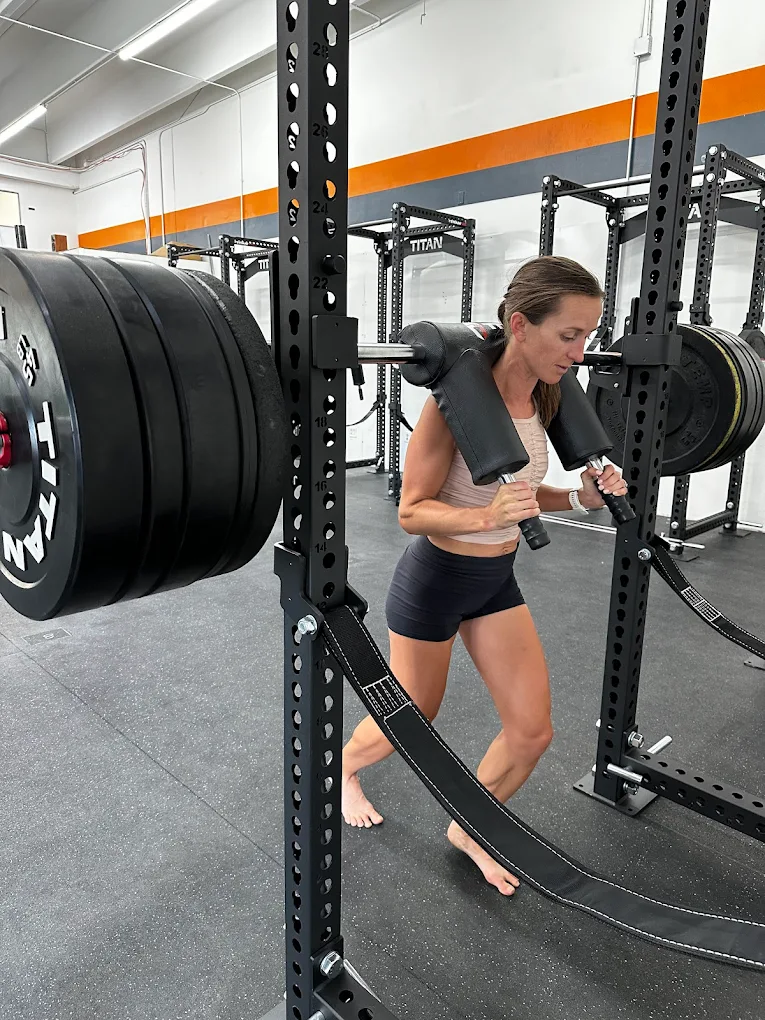
Example: Rear-Foot Elevated Split Squat (RFESS)
3 seconds lowering
3 seconds in the bottom
Hold the bottom position for 2 full breath cycles before returning to the top
These slow breaths help your nervous system interpret the position as safe and encourage deeper range of motion. Your goal in this phase is tissue compliance allowing muscles and connective tissue to tolerate stretch without irritation.
Weeks 3–6: Submaximal Eccentric Block (~60–80% 1RM)
Now increase the challenge with heavier, slower eccentrics.
Use moderate weight (60–80% of 1RM)
Slowly lower into the bottom position
In the bottom: hold for 1 deep breath cycle
Keep sets/reps consistent each week
Progress the tempo:
Week 1: 4-second lowering
Week 2: 5-second lowering
Week 3: 6-second lowering
Week 4: 7-second lowering
No need to change the load, just increase the duration of eccentric load.
Weeks 7–8: Supramaximal Eccentric Block (Use Sparingly)
This is an advanced stimulus and should be used with respect. Avoid intense intervals for 48–72 hours afterward.
Choose only one compound lift to perform this with
Use a load greater than your 1RM, but do not exceed 140% of 1RM
Example with RFESS:
If your best single rep is 50 lbs, use 55–60 lbs
Do not exceed ~70 lbs
One simple method is to lower the weight under control and drop or release it safely at the bottom rather than lifting it concentrically. (The variety of methods of supramaximal eccentrics deserve their own article.)
This block provides a huge stimulus for tendon and muscle remodeling, but the intensity requires caution and smart programming.
Closing Thoughts
Starting your endurance build with strategic strength training isn’t just beneficial, it’s one of the most effective ways to prepare your body for the demanding work ahead.
Early-phase strength enhances tissue resilience, improves technique, and builds the physical foundation necessary to tolerate, and thrive in, your highest training volumes.
Strength first. Mileage later. Performance always.
Start Your Next Block With Kinesis
If you’re looking for expert support implementing these strength strategies, Kinesis Integrated in Boulder, Colorado specializes in helping endurance athletes build a resilient foundation through evidence-based programming. Our coaches design individualized strength progressions, assess movement limitations, and create sport-specific plans that align with your training phases so you can increase mileage safely and maximize performance. Whether you’re preparing for a big race, rebuilding after time off, or wanting to reduce injury risk, Kinesis Integrated provides coaching, assessments, and customized strength training that help Boulder athletes start their season stronger and stay healthy throughout their entire build. We also reopened our remote coaching option to work with you regardless of where you train.
📞 Contact: collen@kinesisintegrated.com
💻 Try the free movement assessment on the Kinesis App
📍 Location: Boulder, Colorado
FAQ:
Why should endurance athletes start their training block with strength work?
Scroll up and read, but in short beginning your training cycle with strength work helps rebuild tissue, improve mobility, and increase resilience after a period of detraining. Early-season strength training, especially eccentric and slow-tempo lifting, prepares your muscles, tendons, and connective tissue for the higher mileage and intensity to come. It’s one of the most effective ways to reduce injury risk and improve long-term performance.
What type of strength training is best early in a build?
During the early phase of your build, slow, controlled eccentric training is ideal. This includes tempo work, deep-range positions, and movements that increase tissue compliance and tendon stiffness. These methods strengthen the entire kinetic chain and create a durable foundation before ramping up volume or intensity in your endurance sport.
How often should endurance athletes lift during the base phase?
Most athletes benefit from 2–3 strength sessions per week during early training. With sport volume still low, there’s more capacity for higher-quality strength work like methods mentioned in this article without overwhelming the system. As mileage increases later in the season, strength frequency and intensity typically shift to maintenance mode. Unless you wish to become a powerlifter/olympic lifter/body builder the gym is supplementary to your sport. While it will help your performance it does not replace training in your sport.
What are eccentric exercises, and why are they important for runners and cyclists?
Eccentric exercises emphasize the lowering phase of a lift for example, taking 4–7 seconds to lower into a squat or split squat. This slow, heavy loading creates high levels of muscle tension, stimulates tendon remodeling, and improves tissue durability. Runners, trail runners, and cyclists benefit greatly from eccentrics because they help prevent common overuse injuries like Achilles tendinopathy, IT band irritation, and knee pain.
When should I avoid supramaximal eccentric strength training?
Supramaximal eccentrics, using a load above your 1RM, are extremely effective but should be used sparingly during early preparation phases. Avoid them before key workouts, races, or during blocks of high run or bike intensity. Most athletes should allow 48–72 hours of recovery afterward. Working with a strength coach ensures you use this advanced method safely and appropriately.
Can these strength methods help reduce injury risk during high-mileage training?
Absolutely. Slow eccentrics, controlled tempo work, and tendon-focused loading help reinforce connective tissue so it can tolerate the high forces of running, cycling, or triathlon training. By improving strength, mobility, and movement quality early, you reduce your risk of overuse injuries later, when training stress peaks.
How do I know which movements or positions I should focus on during early-season strength?
The early phase is the best time to identify limitations in mobility, stability, and technique. Movements like squats, split squats, deadlifts, and step-down variations help expose asymmetries or restricted ranges. A coach can then tailor programming to address these issues before they become problems during heavier training blocks.
Does Kinesis Integrated in Boulder offer individualized strength programs for endurance athletes?
Yes. Kinesis Integrated (Boulder, Colorado) specializes in strength training for endurance athletes, runners, cyclists, triathletes, youth athletes, and mountain athletes. We offer individualized programming, movement assessments, eccentric training progressions, and in-person or hybrid coaching options to help you apply the exact methods discussed in this article safely and effectively.
Can I work with Kinesis Integrated if I’m coming back from time off or injury?
Definitely. The early build is the ideal time for returning athletes to rebuild tissue strength and reintroduce proper mechanics. Kinesis Integrated coaches help Boulder athletes transition from rest, off-season, or rehab back into structured endurance training with a clear, progressive plan tailored to their sport.
How do I get started with strength training at Kinesis Integrated?
You can schedule an assessment or consultation directly through Kinesis Integrated in Boulder, CO. Our coaches will evaluate your movement, discuss your upcoming race or season goals, and create a phased strength plan. Including eccentrics, tempo work, and progression strategies. Designed to support your entire build. We also are offering 100 dollars off your first package of 10 sessions. Use Code: EARLYBIRD25 for $100 off through 12/31/2025.
At Kinesis, we help endurance athletes stay healthy and perform year-round. Whether you’re training for Boston, UTMB, or your local 10K, our strength plans plug into your routine and make you stronger where it counts.
Our app auto-builds a race-specific plan in minutes so you climb harder, descend cleaner, and finish fresher. Start for free here.